
Lighting
Overview
God said, Let there be light: and there was light. Unfortunately, for Video Vision, lighting is a little more complicated than that.
Machine vision systems create images by analyzing the light reflected from an object rather than by analyzing the object itself. Therefore, it is critical to understand how light will reflect from a production part that one is inspecting, as the size, shape, material, and finish all play a role. The object’s color is also important, even if the inspection system is monochromatic (a red part will reflect differently from a pink part). All of these characteristics affect how light is reflected and may pose challenges in creating a good image. Finding the right light source can turn a seemingly difficult problem into a simple one.
Lighting types
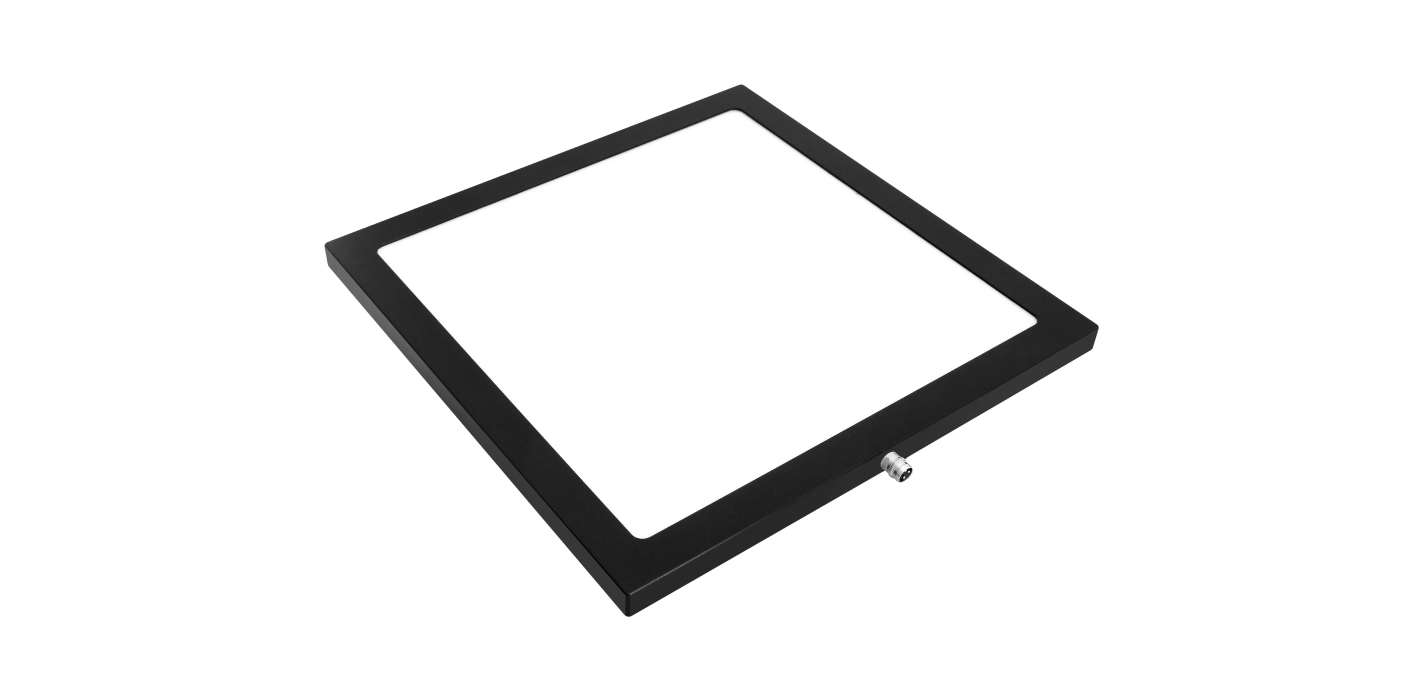
Backlights
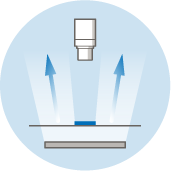
Backlighting projects even illumination from behind the target highlighting the silhouette of the target. This lighting type is used to detect the presence/absence of holes or gaps, measurement or verification of the target outline shape, as well as enhancing cracks, bubbles, and scratches on clear target parts. Note that surface detail is lost with this lighting type.
Bar Lights
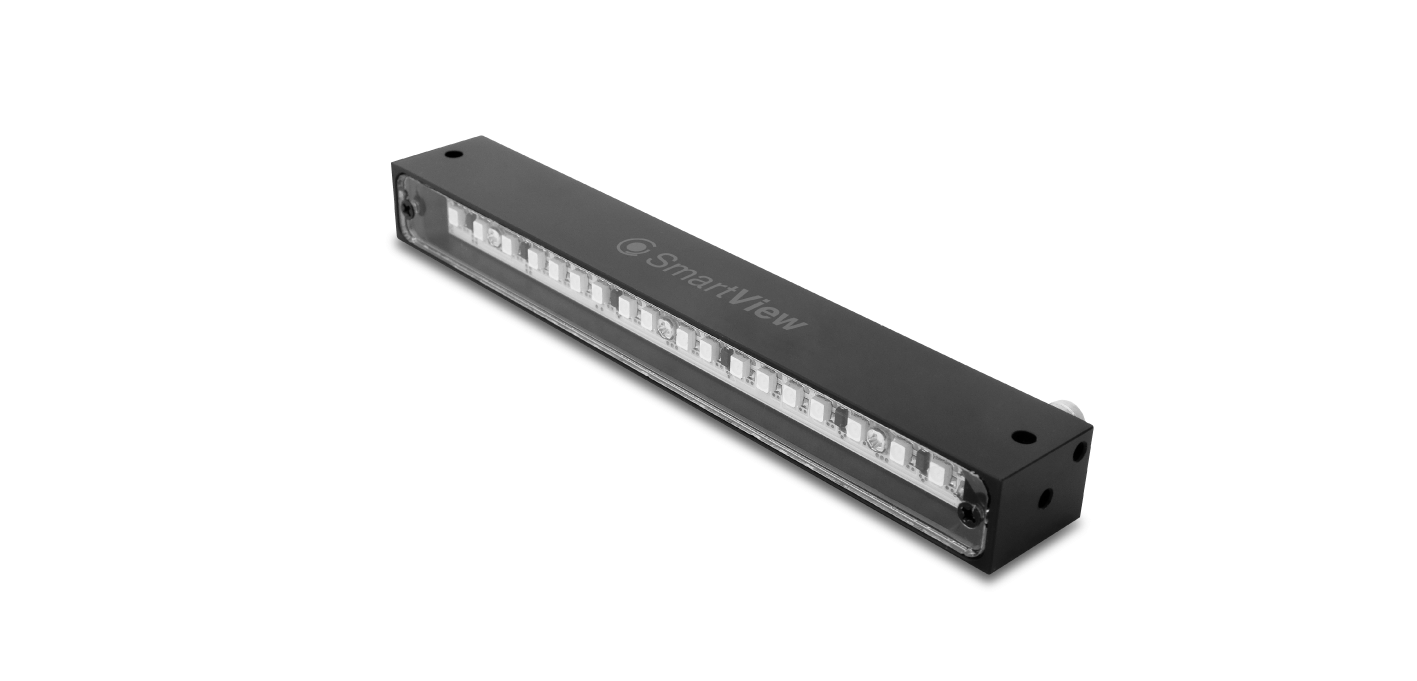
Bar lighting provides a strip of light on the target or along the edge of the target for uniform illumination along the localized area. It can be combined with other bar lights to cover the entire target from all directions. Depending on the angle of the light and camera, bar lighting can enhance or reduce specular reflection. It's used to add contrast to matte surfaces such as paper or cardboard, define edges, or highlight surface features.
Dark Field Lights
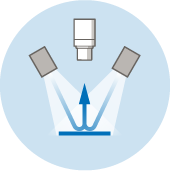
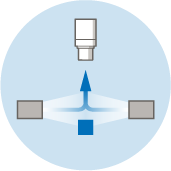
Dark field lighting technique provides light at a shallow angle to the target. Any surface features, like scratches, edges, imprints, or notches, reflect the light back to the camera making these surface features appear bright, while the rest of the surface is dark. This technique can be created with any directional lighting option (bar, ring, spot) that allows for the light to be angled to the part's surface.
Diffuse Dome/Ring Lights
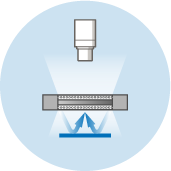
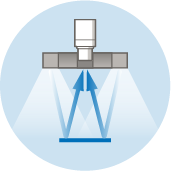
Diffuse lighting technique scatters light to reduce glare on reflective parts. This technique can be applied to all directional lighting (bar, dome, ring) to provide a more uniform spread of light across the target. This lighting technique is helpful in reducing lighting noise like glare and hotspots from on-axis directional lights such as ring lights.
Dome Lights
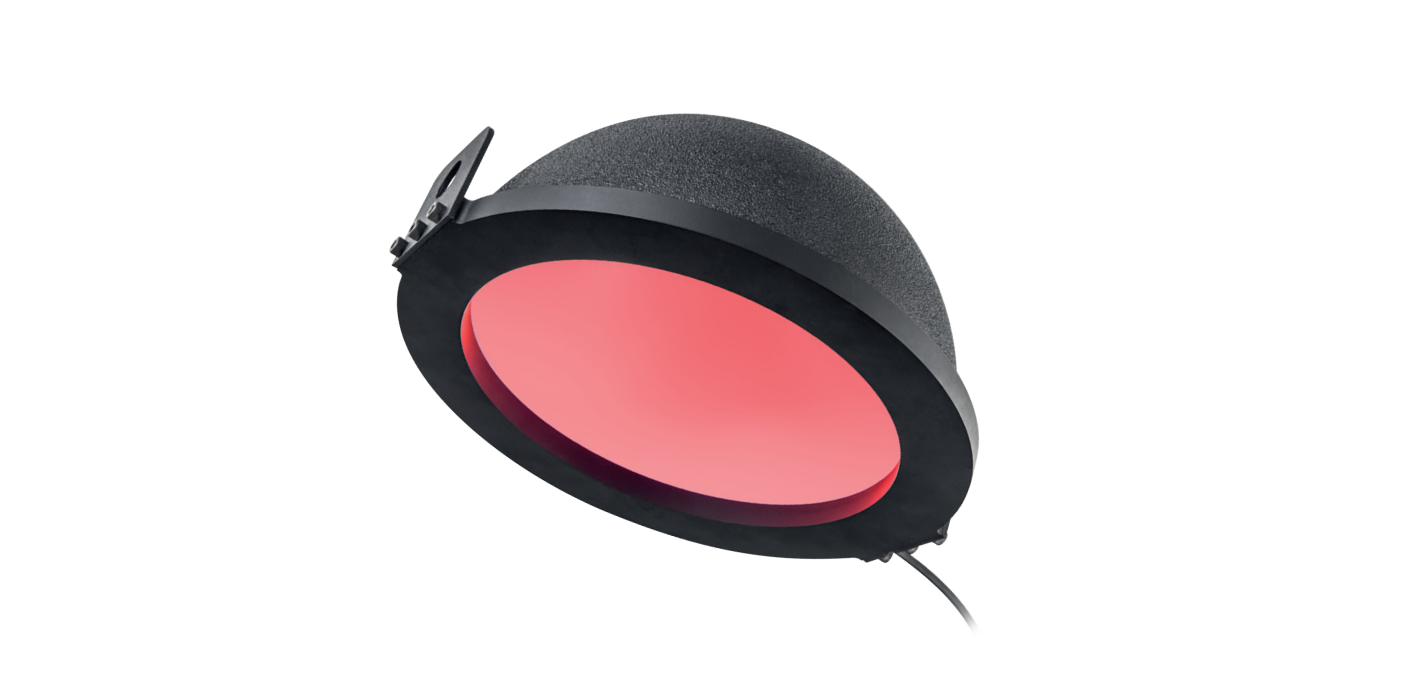
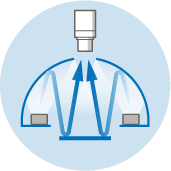
Dome lighting provides uniform light from various angles, which results in no glare, even on mirrored objects. It's often referred to as "cloudy day" illumination since it removes uneven lighting (glare/shadows) and evenly spreads the lighting across the surface of the part. Dome illumination is used most often to inspect shiny, curved, or bumpy surfaces. To be effective, dome lights require close proximity to the target.
Ring Lights
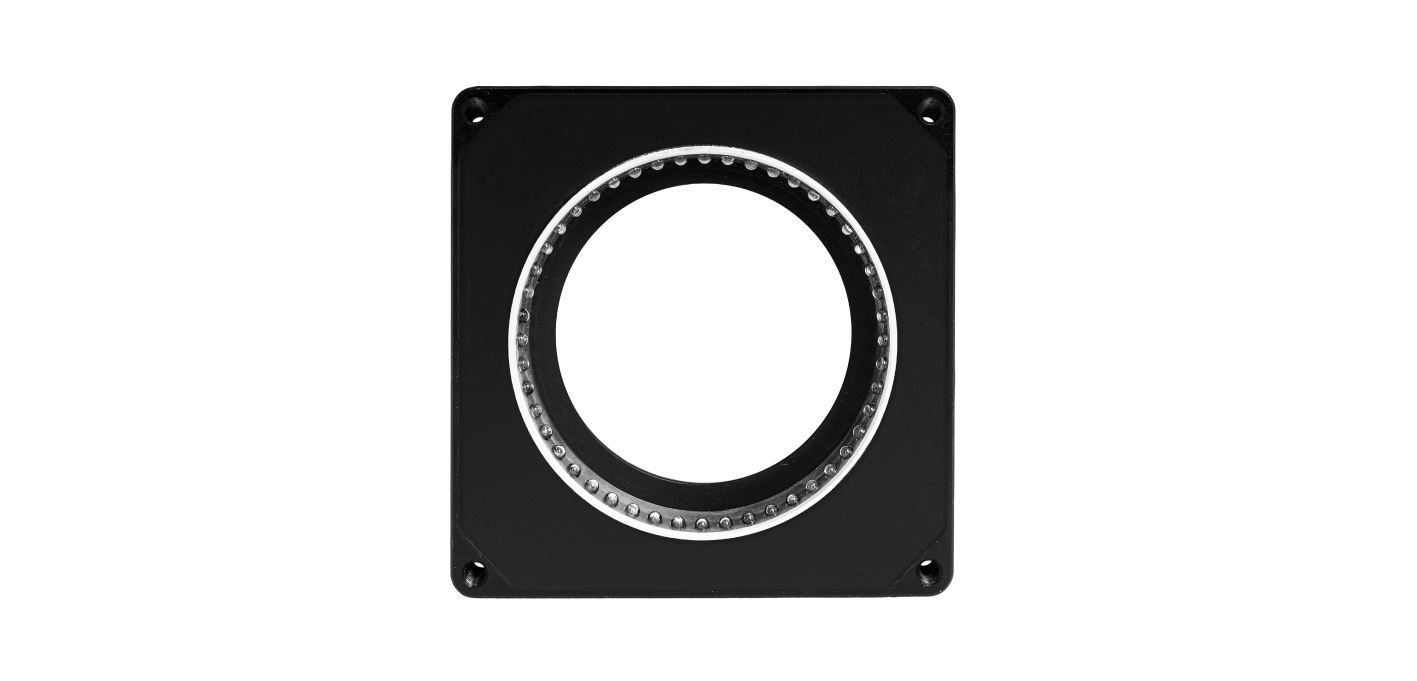
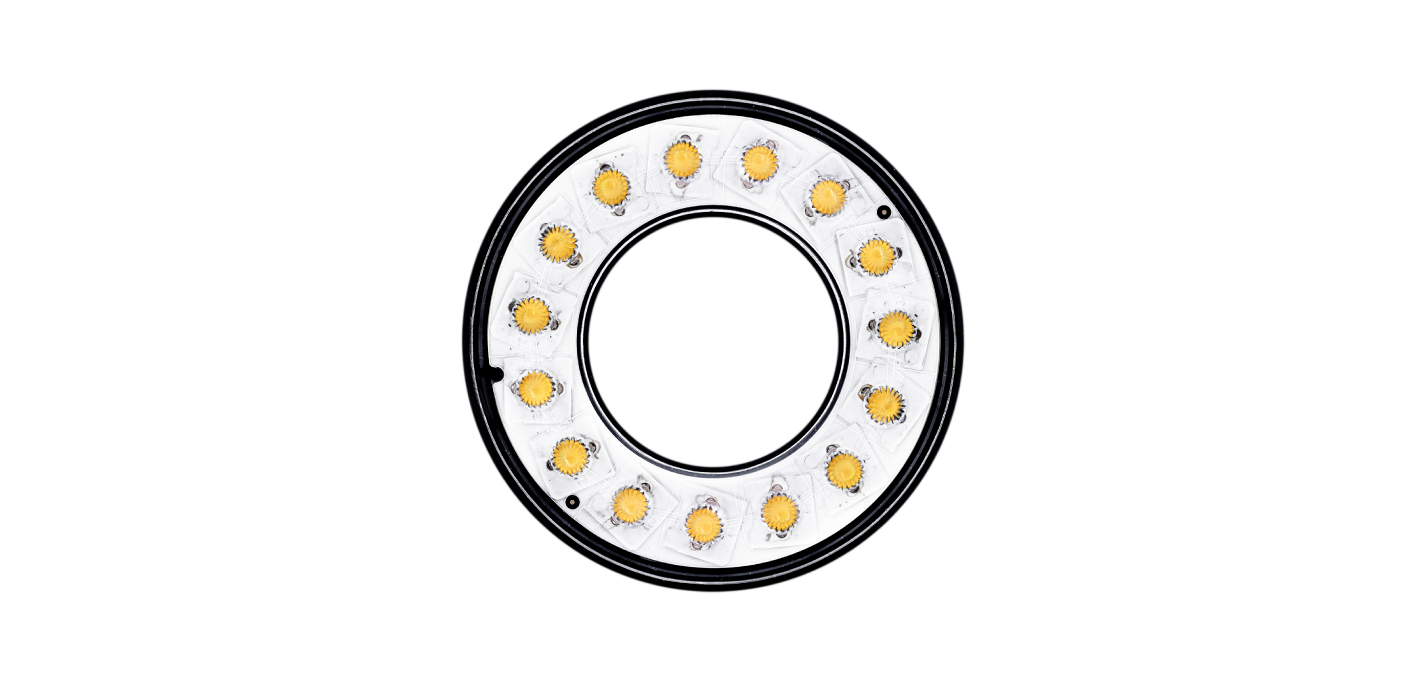
Ring lighting is a circle or ring of bright, intense lighting that provides shadow-free illumination and good image contrast. Ring lighting is a common lighting type covering a broad range of applications due to its versatility. Note that it can cause specular glare on reflective parts.

The wavelength of the light that is used can be an important variable in the inspection process. With illumination by light of a particular color, contrasting colors will be easier to separate out because they will appear dark in the image. This technique can be used to enhance the date codes on jar lids, for example. Infrared light can be used to highlight bruises on produce, and ultraviolet light will cause ink or glue to fluoresce.
Note: Filters should be used on the camera if infrared or ultraviolet light is being used so that the fluorescence of the object can be viewed but not the light itself.
Ambient light
Ambient light includes both natural ambient sunlight and artificial ambient light, such as light from the lamps that light up the production site. The ambient light on the production site, especially in an outdoor scenario, can impact the accuracy and reliability of the application.
It is absolutely essential that the lighting conditions for the monitored area are as consistent as possible.
The lighting conditions of the monitored area can be affected by:
The trajectory of the Sun varying by day/time of year
Weather conditions
Other artificial lighting on the production site
Site personnel or equipment casting shadows on the production line